
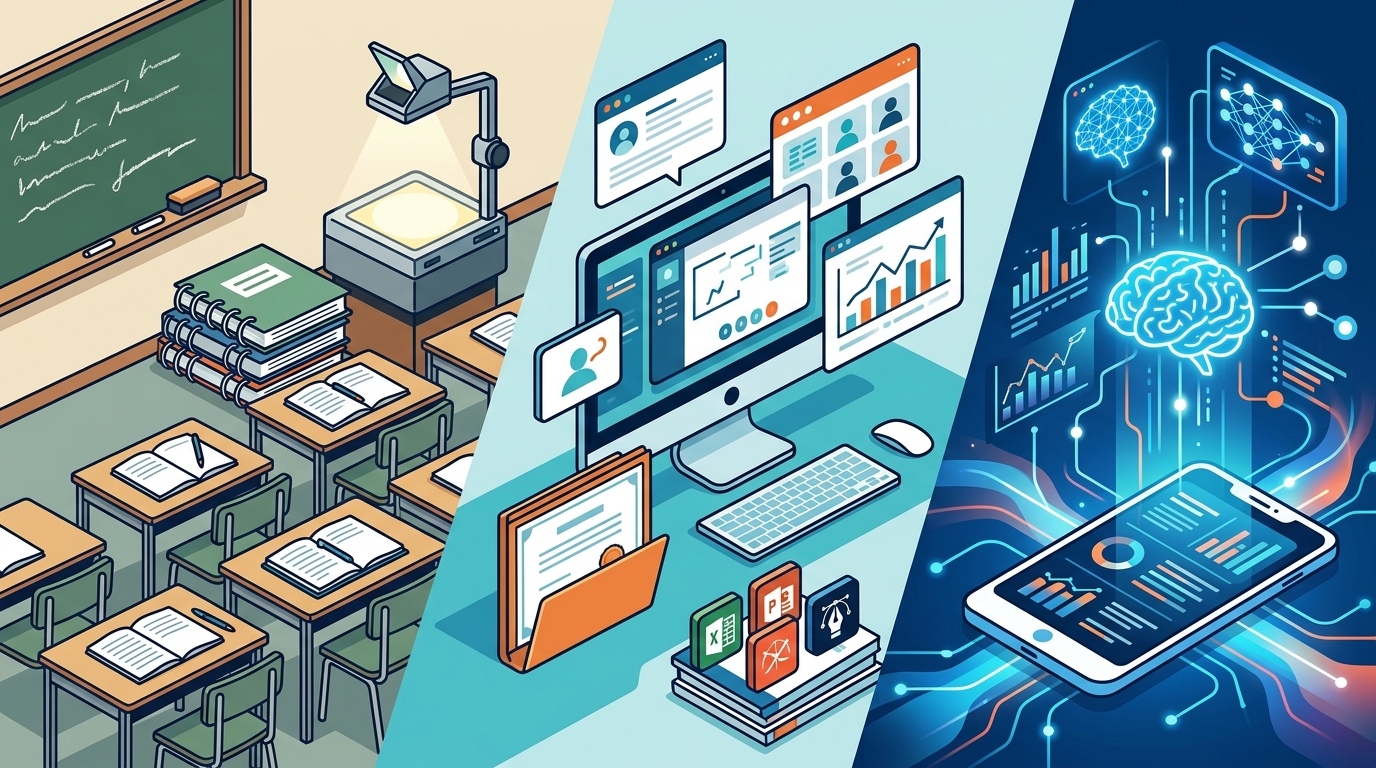
Corporate training has undergone a radical transformation over the last two decades, shifting from static, one-size-fits-all lectures to dynamic, data-driven learning ecosystems. According to recent industry analyses, organizations that prioritize continuous learning see a 218% higher income per employee than those that invest less in formalized training. This shift is not merely a trend but a fundamental restructuring of how knowledge is acquired, retained, and applied in the modern workplace. The journey from traditional instructor-led sessions to personalized, AI-enhanced experiences reflects a broader change in corporate culture, where agility and skill acquisition are paramount for survival. (About Us Dynamic web)
Historical Context: The Classroom Era
For decades, corporate training was synonymous with physical classrooms. Employees would leave their desks for days or weeks to attend seminars led by external experts. This model, while effective for foundational knowledge, suffered from significant logistical challenges. It was expensive, disruptive to daily operations, and difficult to scale across global organizations. The primary limitation was the lack of personalization; every participant received the same content regardless of their existing skill level or learning pace. (Training Packages Explained Dynamic)
During this era, the focus was largely on compliance and basic software proficiency. Training was a periodic event rather than a continuous process. Companies relied heavily on printed manuals and static presentations. The feedback loop was slow, often taking weeks to assess the effectiveness of a training program through post-course surveys. This static approach struggled to keep pace with the rapid technological advancements that began to reshape industries in the late 1990s and early 2000s. (Computer and IT Courses)
The Digital Transformation
The advent of the internet and improved broadband connectivity catalyzed the first major shift in corporate learning. E-learning platforms emerged, allowing organizations to deliver content remotely. This democratized access to information, enabling employees to learn at their own pace and on their own schedules. The concept of "just-in-time" learning became prevalent, where employees could access specific tutorials exactly when they needed them, rather than weeks after a classroom session. (Computer and IT Courses)
This period also saw the rise of Learning Management Systems (LMS). These platforms allowed HR departments to track progress, manage enrollments, and generate reports on training completion. However, early e-learning was often criticized for being engaging-poor. Many organizations simply repackaged classroom lectures into digital slides, resulting in low completion rates and minimal knowledge retention. The key lesson learned was that digitization alone was not enough; the content itself needed to be interactive and relevant.
AI and Personalized Learning
Today, we are witnessing the third wave of corporate training evolution, driven by Artificial Intelligence (AI) and Machine Learning. AI is the simulation of human intelligence processes by computer systems. This technology enables hyper-personalized learning paths that adapt to individual employee needs in real-time. Instead of a static curriculum, AI algorithms analyze performance data to recommend specific modules, videos, or exercises that address knowledge gaps.
Generative AI tools are now being integrated into learning platforms to create dynamic content, simulate complex business scenarios, and provide instant feedback. For example, an employee learning sales techniques can practice with an AI-powered virtual customer that responds naturally to their arguments. This immersive approach significantly enhances engagement and retention. According to recent data, companies using AI-driven learning tools report a 40% increase in knowledge retention compared to traditional methods. The ability to scale personalized coaching is a game-changer for large enterprises.
Proven Training Methodologies
Despite technological advancements, the core principles of effective pedagogy remain unchanged. Successful corporate training still relies on structured methodologies that ensure comprehension and application. One such proven framework is the "Instruct, Demonstrate, Challenge" model. This approach ensures that learners first understand the theory, then see it applied, and finally practice it themselves.
Instruct involves providing a clear theoretical understanding of the software features or business processes. Demonstrate follows, where trainers or digital assets show exactly how tasks are performed and what the expected outcomes are. Finally, Challenge requires participants to combine theory and practice to perform the training task independently. This three-part process is critical for ensuring that learning outcomes are fully understood and can be applied in real-world scenarios.
Hands-on practice is non-negotiable in modern training. Whether through virtual labs, simulated environments, or real-world projects, learners must engage with the material actively. Passive consumption of content leads to rapid forgetting. By integrating practical exercises into every stage of the learning journey, organizations can bridge the gap between knowing and doing. This is particularly important for technical skills like coding, data analysis, and software development.
Comparing Training Delivery Models
Understanding the differences between various training delivery models is essential for selecting the right approach for your organization. Each model has distinct advantages and limitations depending on the learning objectives, budget, and timeline.
| Delivery Model | Best For | Pros | Cons |
|---|---|---|---|
| Instructor-Led Classroom | Complex, interactive skills | Immediate feedback, networking | High cost, scheduling rigidity |
| Online Live Training | Geographically dispersed teams | Flexibility, real-time interaction | Requires self-discipline |
| Self-Paced E-Learning | Compliance, basic software | Low cost, scalable | Low engagement, no support |
| AI-Driven Microlearning | Skill reinforcement, updates | Personalized, bite-sized content | Requires robust data infrastructure |
Choosing the right model often involves a blended approach. For instance, a company might use instructor-led training for foundational concepts, followed by AI-driven microlearning for ongoing reinforcement. This hybrid strategy maximizes the benefits of each method while mitigating their respective drawbacks. It is crucial to align the delivery model with the specific learning outcomes and the organizational culture.
Key Takeaways
- Organizations prioritizing continuous learning see a 218% higher income per employee.
- Corporate training has evolved from static classrooms to dynamic, AI-enhanced ecosystems.
- The "Instruct, Demonstrate, Challenge" methodology remains a gold standard for skill acquisition.
- AI enables hyper-personalized learning paths that adapt to individual employee needs in real-time.
- Hands-on practice is critical for bridging the gap between theoretical knowledge and practical application.
- Blended learning strategies often yield the best results by combining multiple delivery models.
- Dynamic Web Training has been a leader in instructor-led software training since 2000.
Frequently Asked Questions
What is the most effective method for corporate training?
There is no single "most effective" method for all situations. However, blended learning approaches that combine instructor-led sessions with AI-driven personalized content typically yield the highest engagement and retention rates. The key is to match the delivery method to the complexity of the skill being taught.
How has AI changed corporate learning?
AI has transformed corporate learning by enabling personalization at scale. It allows organizations to create adaptive learning paths that respond to individual performance data, recommend relevant content, and provide instant feedback. This shifts training from a generic experience to a tailored journey for each employee.
What is the "Instruct, Demonstrate, Challenge" model?
This is a proven training methodology where trainers first provide theoretical understanding (Instruct), then show how tasks are performed (Demonstrate), and finally require participants to practice the task independently (Challenge). This three-part process ensures deep comprehension and practical application.
Why is hands-on practice important in training?
Hands-on practice is essential because it bridges the gap between knowing and doing. Passive learning leads to rapid forgetting, while active engagement reinforces neural pathways and builds muscle memory. It allows learners to apply concepts in a safe environment before implementing them in the workplace.
How can businesses measure the ROI of training?
Businesses can measure ROI by tracking metrics such as employee performance improvements, reduction in errors, increased sales figures, and employee retention rates. Pre- and post-training assessments also provide valuable data on knowledge acquisition and skill application.
What is microlearning?
Microlearning is an educational strategy that delivers content in small, focused bursts. It is designed to fit into the busy schedules of modern workers and improve knowledge retention by focusing on one specific concept at a time. It is particularly effective for reinforcing skills and providing just-in-time information.
Is instructor-led training still relevant?
Yes, instructor-led training remains highly relevant, especially for complex topics that require nuanced discussion, immediate feedback, and interpersonal interaction. While digital tools are powerful, the human element of expert guidance and peer learning cannot be fully replicated by technology alone.
Start Your Training Journey
The evolution of corporate training is far from over. As technology continues to advance, organizations that adapt quickly will gain a significant competitive advantage. Whether you are looking to upskill your team in Microsoft Office, Adobe Creative Cloud, or emerging AI tools, choosing the right training partner is crucial. Dynamic Web Training offers a comprehensive range of courses designed to meet the diverse needs of modern businesses. Explore our course catalog to find the perfect learning path for your team. Contact our expert team today to discuss your specific training requirements and discover how we can help you maximize your training investment.