
SQL remains the foundational language for data interaction, yet many professionals hesitate to upskill due to persistent misconceptions about online learning. According to recent industry analyses, organizations that invest in structured SQL training see a significant increase in data-driven decision-making capabilities. This guide dismantles the most common barriers to entry and clarifies what to expect from live instructor-led sessions. (Training Packages Explained Dynamic)
Myth 1: Online SQL Training Lacks Hands-On Rigor
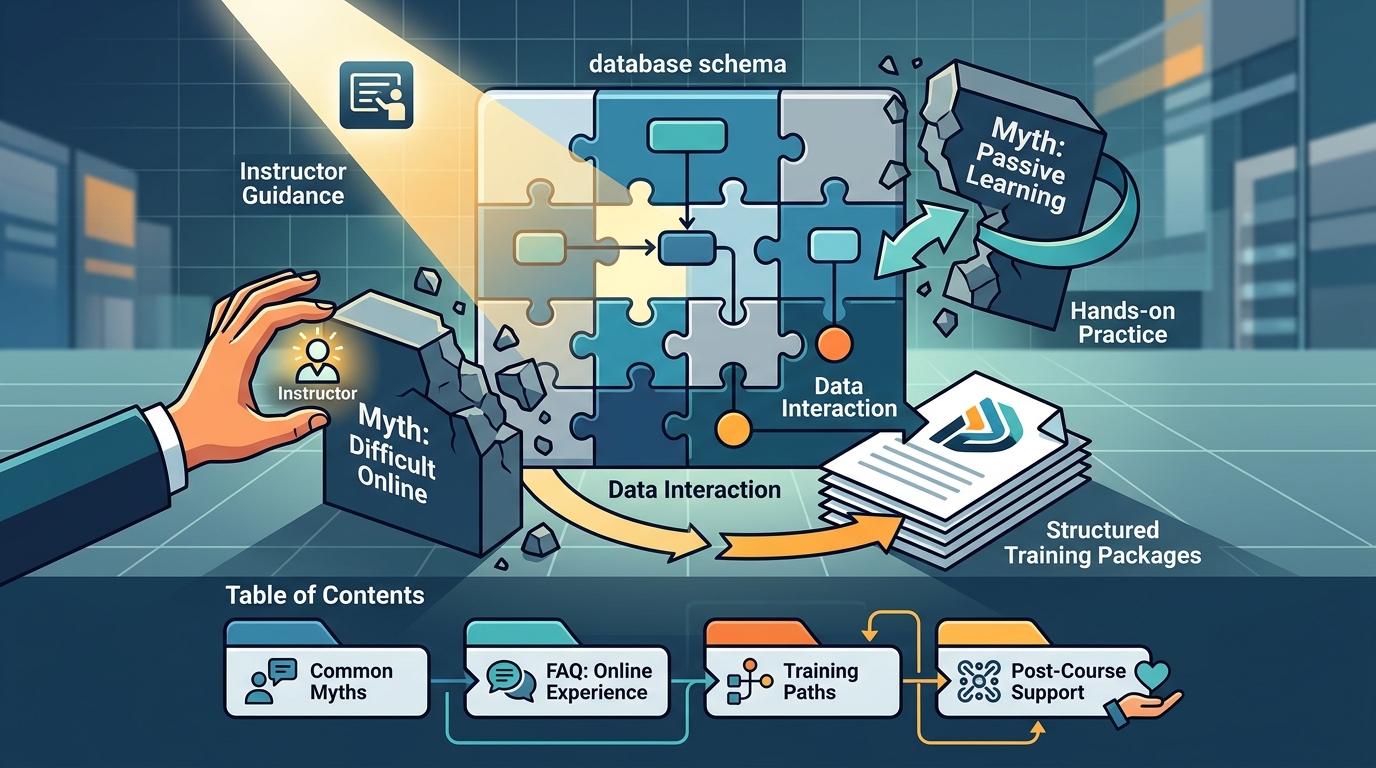
A prevalent myth suggests that learning SQL online is purely theoretical and disconnected from practical application. This is fundamentally incorrect. Live instructor-led online training replicates the classroom environment through interactive digital workspaces. Instructors demonstrate queries in real-time, and students execute them simultaneously on their own machines.
SQL is a procedural language where syntax precision matters. Without immediate feedback, learners often develop bad habits that are difficult to unlearn. Dynamic Web Training addresses this by providing fully set-up computer labs for all participants. This ensures that every student has the necessary environment to practice without technical friction.
The "Instruct, Demonstrate, Challenge" methodology used by leading providers ensures that learners do not just watch but actively engage. This approach bridges the gap between theory and practice, ensuring that participants can write complex queries with confidence after the course concludes.
Myth 2: You Cannot Get Real-Time Help Online
Many professionals fear that online courses isolate them from expert guidance. In reality, live online sessions offer more direct access to instructors than traditional large lecture halls. During a live session, you can ask questions via chat or voice, and the instructor can address them immediately.
This immediacy is crucial when debugging complex SQL joins or optimizing slow-running queries. According to data from professional training providers, student satisfaction rates for live online courses often exceed those of pre-recorded modules due to this interactive element. The ability to pause and clarify a concept instantly prevents small misunderstandings from becoming major roadblocks.
Furthermore, post-course support is a critical component of effective training. Providers like Dynamic Web Training offer free email support to help students resolve lingering issues. This extended support network ensures that learning continues beyond the scheduled class hours.
Myth 3: SQL is Too Complex for Self-Paced Learning
While SQL has a steep learning curve for beginners, the idea that it requires a rigid classroom structure is outdated. However, self-paced learning often lacks the accountability and structured progression that live courses provide. Live instructor-led training offers a curated path through complex topics like window functions, stored procedures, and database normalization.
SQL is a standardized query language used to manage relational databases. Its structure allows for precise data manipulation, but mastering it requires understanding the logical flow of data processing. Live instructors guide learners through this logic, explaining the "why" behind the "how." This contextual understanding is often lost in fragmented self-paced modules.
Additionally, live courses foster peer learning. Participants can share different approaches to solving the same problem, broadening their perspective on data manipulation. This collaborative environment mirrors real-world workplace scenarios where data teams work together to optimize database performance.
Frequently Asked Questions: Benefits and Logistics
What is the difference between live online and pre-recorded SQL courses?
Live online courses offer real-time interaction with an instructor and peers. Pre-recorded courses allow you to learn at your own speed but lack immediate feedback. Live sessions are ideal for those who need structured guidance and immediate clarification on complex topics.
How long do typical SQL training courses last?
Standard SQL courses typically range from one to five days, depending on the depth of the material. Introductory courses may last one day, while advanced optimization courses can span multiple days. Dynamic Web Training offers flexible scheduling to accommodate various learning paces.
Do I need prior programming experience to take an SQL course?
No prior programming experience is strictly required for introductory SQL courses. However, basic computer literacy and logical thinking skills are beneficial. Instructors start with fundamental concepts and gradually build complexity, ensuring that beginners can keep up.
Are certificates provided upon completion?
Yes, most reputable training providers, including Dynamic Web Training, issue a Certificate of Completion. This certificate recognizes your software skills and can be added to your professional portfolio or LinkedIn profile to demonstrate competency.
Frequently Asked Questions: Technical Requirements
What software do I need to install before the course?
Participants typically need a computer with a stable internet connection. Dynamic Web Training provides fully set-up computer labs, meaning you do not need to install complex database software yourself. The instructor guides you through the necessary tools during the session.
Can I use a Mac or Windows PC?
Most SQL training is platform-agnostic as SQL is a standard language. However, some specific tools might have platform preferences. It is best to check with the training provider regarding specific software requirements. Generally, both Windows and macOS environments are supported.
What happens if I have technical issues during the live session?
Technical support is usually available during live sessions. If you experience connectivity issues, you can often switch to audio-only mode or reconnect later. Instructors are trained to handle minor technical disruptions without derailing the learning flow.
Frequently Asked Questions: Career Impact
How does SQL training improve job prospects?
SQL skills are highly sought after across industries. Data analysts, business intelligence professionals, and software developers all rely on SQL. According to industry reports, professionals with SQL proficiency often command higher salaries and have more career advancement opportunities.
Is SQL training relevant for non-technical roles?
Yes, SQL is increasingly relevant for marketing, finance, and operations roles. These professionals use SQL to extract insights from company databases without relying on IT departments. This autonomy makes SQL a valuable skill for business analysts and managers.
Can I apply what I learn in SQL training to my current job?
Absolutely. The hands-on nature of live training ensures that you can immediately apply new skills to your work. Whether you are generating reports, cleaning data, or optimizing queries, the techniques learned in class are directly transferable to professional tasks.
Key Takeaways
- Live online SQL training provides real-time interaction and immediate feedback, debunking the myth of isolation.
- Dynamic Web Training has been a leader in software training since 2000, offering certified expert trainers.
- The "Instruct, Demonstrate, Challenge" methodology ensures practical mastery of SQL concepts.
- Participants receive free email support and a Certificate of Completion to validate their skills.
- SQL is a standardized query language essential for managing relational databases across various industries.
- Training packages are available for consolidated learning, offering discounts and flexible scheduling.
- Over 12,000 businesses and entrepreneurs trust Dynamic Web Training for their development needs.
Frequently Asked Questions Summary
Is live online SQL training effective?
Yes, live online training is highly effective due to its interactive nature and immediate instructor support.
Do I need to install SQL software myself?
No, providers like Dynamic Web Training supply fully set-up computer labs for all participants.
Are there prerequisites for SQL courses?
Basic computer literacy is sufficient for introductory courses; no prior programming experience is required.
How long does it take to complete an SQL course?
Courses typically last between one and five days, depending on the depth and level of the training.
Is SQL useful for non-technical professionals?
Yes, SQL is valuable for business analysts, marketers, and managers who need to extract data insights.
What support is available after the course?
Free email support is often provided to help students resolve lingering technical or conceptual questions.
Do I get a certificate after training?
Yes, a Certificate of Completion is issued to recognize your newly acquired software skills.
Start Your SQL Journey Today
Overcoming these myths is the first step toward mastering SQL. Live instructor-led training offers the perfect balance of structure, interaction, and practical application. Whether you are looking to enhance your data analysis skills or transition into a technical role, the right training can make all the difference.
Dynamic Web Training provides comprehensive SQL courses tailored to various skill levels. Explore our SQL Courses page to find the perfect fit for your needs. You can also view our Training Packages for discounted multi-course options. For more information on our methodology, visit our About Us page. To book your seat, contact our team directly or visit our Course Dates page. Take the next step in your professional development with Dynamic Web Training.