
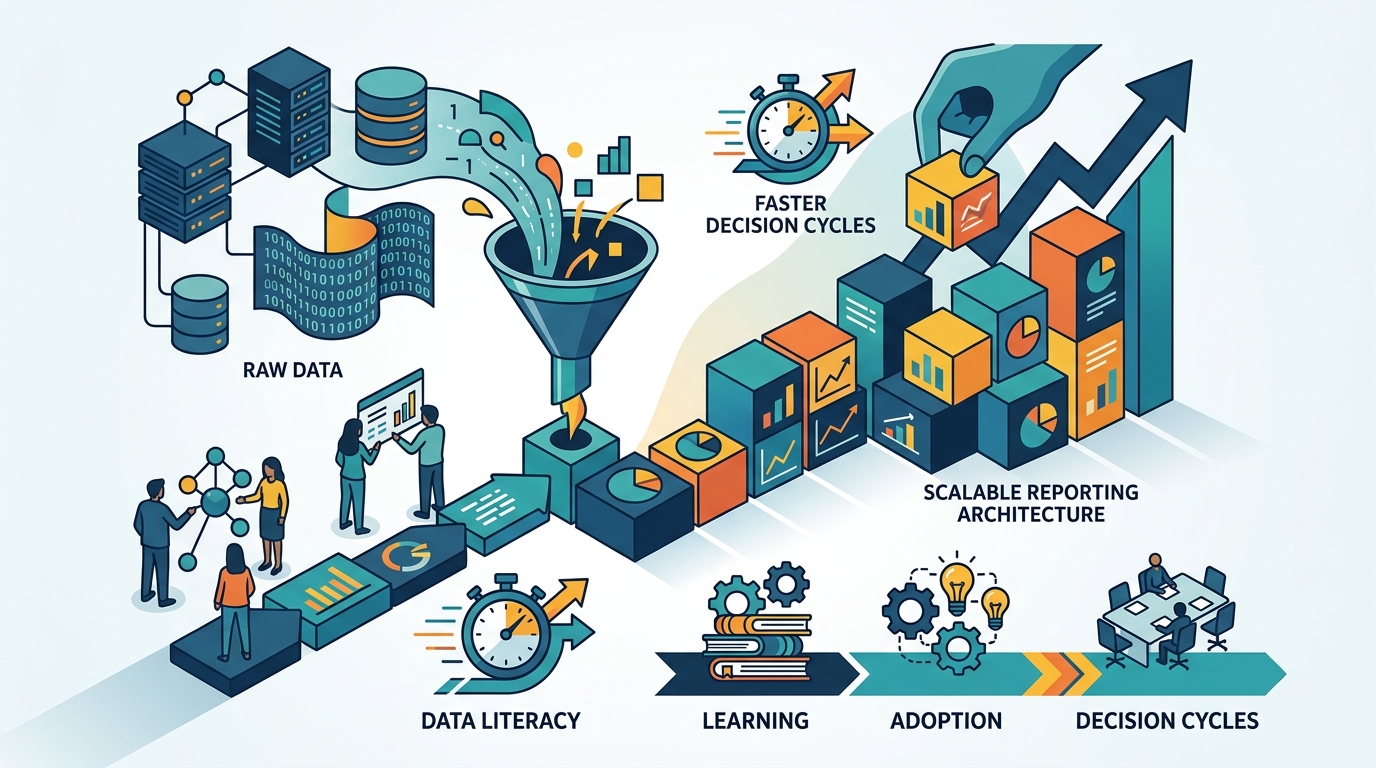
Business intelligence adoption continues to accelerate across Australian enterprises. According to recent industry reports, over 68 percent of mid-market organizations now rely on data visualization tools for daily operations. This rapid shift creates immediate demand for certified professionals who can build scalable reporting architectures. Organizations that invest in structured learning programs consistently report higher data literacy rates and faster decision cycles. Selecting the right educational pathway requires careful evaluation of curriculum depth, instructor expertise, and practical application methods. (Microsoft Power BI) (Computer and IT Courses)
Curriculum Design and Learning Outcomes
Power BI is a comprehensive business analytics platform that enables users to visualize data and share insights across an organization. Effective training programs must cover data modeling, DAX formula development, and dashboard deployment. Students should progress through foundational interface navigation before advancing to complex data transformation workflows. Top-tier courses incorporate real-world datasets that mirror actual corporate reporting requirements. Learners who complete hands-on modules consistently demonstrate stronger analytical reasoning during workplace assessments. (Microsoft Power BI)
Data modeling is the systematic process of organizing raw information into structured relationships that support efficient querying. Instructors must demonstrate how to establish primary keys, foreign keys, and cardinality constraints. Students practice building star schemas that optimize query performance across large datasets. This technical foundation separates basic report creators from advanced analytics professionals. Organizations prioritize candidates who understand relationship mapping and query optimization.
Delivery Methods and Classroom Logistics
Instructor-led classroom training remains the preferred delivery model for complex software applications. Face-to-face interaction allows immediate troubleshooting of configuration errors and syntax mistakes. Participants benefit from direct mentorship during live data connection attempts. Virtual classroom alternatives provide geographic flexibility while maintaining interactive engagement. Both formats require dedicated workstation access with preconfigured software environments.
Software configuration is the technical process of installing, licensing, and customizing application settings for optimal performance. Training facilities must maintain updated Microsoft licenses and sandbox environments for student practice. Instructors verify that each workstation meets minimum hardware specifications before session commencement. Reliable internet connectivity ensures seamless access to cloud-based data connectors. Students who experience uninterrupted lab access complete assignments faster and with fewer technical interruptions.
Pricing Structures and Training Packages
Corporate training budgets require transparent pricing models that align with organizational learning objectives. Single-course registrations typically range between 800 and 1200 Australian dollars per participant. Multi-course bundles offer substantial discounts for teams requiring comprehensive skill development. Organizations can access discounted rates by purchasing training packages that combine related modules. This approach reduces per-student costs while maximizing knowledge retention across departments.
Training packages are structured educational bundles that combine multiple related courses into a single discounted offering. These packages typically cover foundational modules alongside advanced specialization tracks. Companies benefit from consolidated billing, unified scheduling, and consistent instructor assignments. Budget planning becomes significantly easier when organizations purchase bundled learning pathways. Financial predictability allows finance departments to allocate training resources without unexpected overages.
Certification Pathways and Exam Readiness
Microsoft certification validates professional competency and demonstrates mastery of enterprise analytics tools. The PL-300 exam assesses skills in data preparation, modeling, visualization, and deployment. Successful candidates earn the Microsoft Certified: Power BI Data Analyst Associate credential. Training providers must align their syllabus with official exam objectives to ensure high pass rates. Students who complete comprehensive preparation modules consistently achieve certification on their first attempt.
Exam preparation is the structured process of reviewing core competencies, practicing sample assessments, and identifying knowledge gaps. Instructors provide targeted review sessions that focus on weak areas identified during mock examinations. Practice environments replicate the actual testing interface to reduce candidate anxiety. Candidates who utilize official study guides alongside hands-on labs demonstrate superior retention rates. Employers actively seek certified professionals to lead internal analytics initiatives.
Provider Comparison and Selection Criteria
Selecting the optimal training provider requires evaluating student satisfaction metrics, course update frequency, and post-training support. Leading Australian institutions maintain high recommendation rates and consistently publish updated curriculum materials. Prospective students should verify instructor credentials and request detailed syllabus documentation before enrollment. Organizations must prioritize providers that offer flexible rescheduling policies and technical assistance. The right educational partner accelerates team productivity and reduces onboarding friction.
Student satisfaction metrics reflect the overall quality of instructional delivery, facility management, and learning outcomes. Leading providers consistently maintain satisfaction scores above 4.8 out of 5.0 across thousands of completed sessions. High recommendation percentages indicate that graduates successfully apply classroom knowledge in professional environments. Organizations should request verified review data before committing to long-term training contracts. Transparent performance metrics protect corporate training investments from substandard educational delivery.
Training Options Summary
| Course Format | Duration | Target Audience | Key Features |
|---|---|---|---|
| Standard Classroom | Two Days | Business Analysts | Hands-on Lab Access |
| Executive Workshop | One Day | Department Managers | Strategic Dashboard Design |
| Advanced Analytics | Three Days | Data Engineers | DAX Optimization Techniques |
| Custom Corporate | Flexible | Enterprise Teams | Tailored Curriculum Mapping |
Key Takeaways
- Over 68 percent of Australian mid-market organizations now utilize data visualization tools for daily operations.
- Microsoft Certified: Power BI Data Analyst Associate credential requires passing the PL-300 examination.
- Standard classroom programs typically span two full days with dedicated workstation access.
- Multi-course training packages deliver substantial cost reductions for enterprise learning initiatives.
- Leading providers maintain student satisfaction scores exceeding 4.83 across 66,310 completed sessions.
- 97.51 percent of graduates actively recommend their chosen educational provider to colleagues.
- Organizations that invest in structured learning consistently report higher data literacy rates.
Frequently Asked Questions
How long does a standard Power BI training course take?
Standard classroom programs typically require two full business days to cover foundational concepts through advanced dashboard deployment. Intensive workshops may condense core modules into a single day for experienced professionals. Custom corporate programs adjust duration based on team skill levels and specific business requirements.
Is prior programming experience required to enroll?
Participants do not need prior coding knowledge to begin foundational modules. Instructors design curriculum to accommodate complete beginners while challenging advanced users. Students with SQL or Excel expertise will naturally progress through data transformation sections faster.
What software prerequisites must I install before attending?
Training facilities provide preconfigured workstations with all necessary Microsoft licenses and sandbox environments. Attendees should bring a valid email address for cloud connector authentication during live exercises. Personal laptops are permitted if they meet minimum hardware specifications and run supported operating systems.
Does the course include official Microsoft exam preparation materials?
Comprehensive training packages align directly with official exam objectives and provide targeted review sessions. Instructors distribute practice assessments that replicate the actual testing interface and question formats. Candidates who utilize these resources consistently achieve certification on their initial examination attempt.
Can organizations schedule private training sessions for their teams?
Corporate training divisions can request customized scheduling that accommodates departmental workflows and project deadlines. Instructors adapt case studies to reflect specific industry datasets and reporting requirements. Flexible booking options ensure minimal operational disruption while maximizing team skill development.
What support is available after course completion?
Graduates receive access to post-training technical assistance and updated resource libraries. Instructors remain available for follow-up questions regarding workplace implementation challenges. Organizations benefit from ongoing curriculum updates that reflect the latest Microsoft platform releases.
Book Your Power BI Training Today
Organizations seeking certified analytics professionals should secure their preferred training dates immediately. Limited classroom seating ensures personalized instructor attention and optimal learning outcomes. Visit the primary portal to explore available schedules, request detailed syllabi, and secure corporate discounts. Secure your training seat now and empower your team with enterprise-grade data skills.